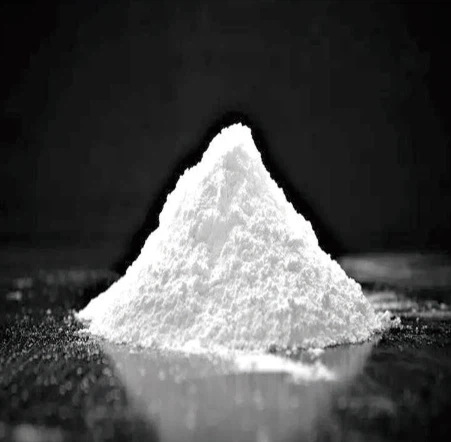
Titanium Dioxide
Titanium Dioxide
CASNo.:1317-80-2
The types of titanium dioxide(Tio2)are:sulfuric acid titanium dioxide, chloride titanium dioxide,anatase titanium dioxide,rutile titanium dioxide, pigment titanium dioxide, special titanium dioxide. It can be used as ink,plastic,paper,cosmetics, rubber,coatings and other fields. Titanium dioxide not only has good physical and chemical stability, but also a variety of good resistance,with other ink materials with low price characteristics.
Packing: 25kg bag
产品详情
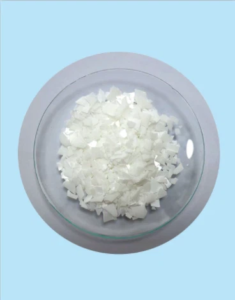
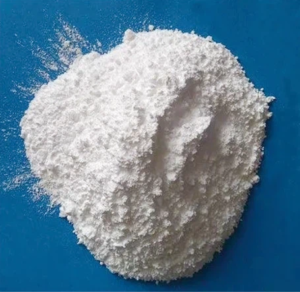
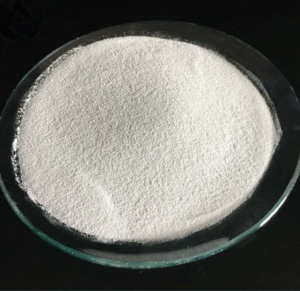
Titanium Dioxide, commonly known as titanium white, is an inorganic compound with the chemical formula TiO₂. It is composed of titanium and oxygen elements.
- Physical Properties: It is a white amorphous powder, odorless and tasteless, insoluble in water, fatty acids, other organic acids, and weak inorganic acids, and slightly soluble in alkalis and hot nitric acid. It has a molar mass of 79.866 g/mol and a density of 3.9 g/cm³ – 4.3 g/cm³. There are three crystalline forms in nature, namely rutile, anatase, and brookite. The melting point of rutile is 1850 °C, and the boiling point is 2500 °C – 3000 °C. Rutile is the most stable, and the other two crystalline forms will transform into rutile at high temperatures.
- Chemical Properties: Titanium Dioxide is a weakly acidic amphoteric oxide with extremely stable chemical properties. It hardly reacts with other elements and compounds at room temperature. However, it can react with concentrated sulfuric acid, hydrofluoric acid, strong alkalis, and metal oxides under certain conditions. For example, it can react with concentrated sulfuric acid when boiled for a long time to form titanium sulfate or titanyl sulfate.
- Production Methods: It can be obtained by the acid decomposition of rutile or the decomposition of titanium tetrachloride. The main preparation methods include the sulfuric acid method, the hydrolysis method, and the chlorination method. The sulfuric acid method uses concentrated sulfuric acid to decompose ilmenite, and after a series of treatments, titanium white is obtained. The chlorination method chlorinates ilmenite to obtain titanium tetrachloride, which is then oxidized by air to obtain titanium Dioxide.
- Applications: Due to its strong coloring power and large refractive index, it is widely used in the chemical industry, such as in coatings, plastics, paper, and inks. It is also the most ideal matting material for synthetic fibers and the main component of the surface flux of welding electrodes. Nano – Titanium Dioxide particles can be used in composite food packaging materials and are the most commonly used inorganic additives in sunscreen cosmetics. In addition, it can also be used to manufacture refractory glass, enamel, and functional ceramic components.