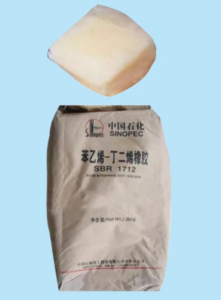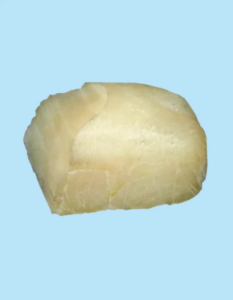
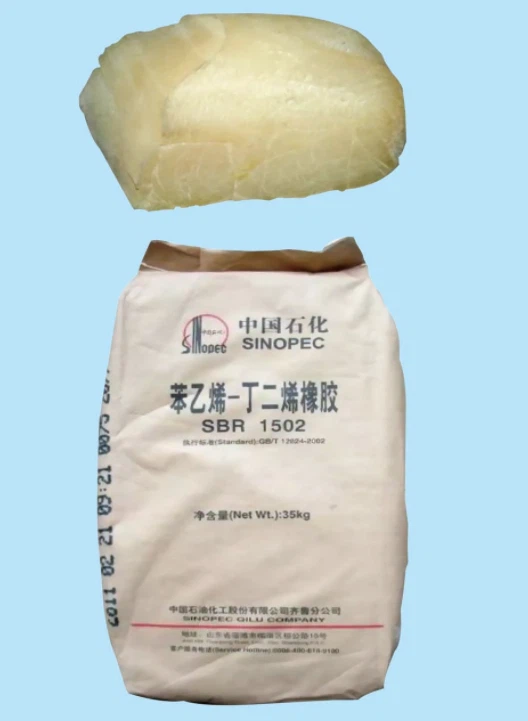
SBR-1502
Styrene Butadiene Rubber (SBR)1502
CAS NO: 9003-55-8
It is used in the manufacture of sponge rubber,impregnated fibers and fabrics,but also directly used as adhesives, coatingS, Used for aluminum plastic composite pipe,oil- free seal, tool manufacturing,ballpoint pen handshake set, automotive electrical plastic parts, etc
Packing: 35kg/bag
产品详情
Styrene Butadiene Rubber (SBR) is a synthetic copolymer elastomer produced by the polymerization of styrene and butadiene monomers. It is one of the most widely used general-purpose rubbers globally, with performance similar to natural rubber (NR) but offering better abrasion resistance and cost-effectiveness.
1. Basic Chemical Properties
- Chemical Structure: Random copolymer of styrene (C₈H₈) and butadiene (C₄H₆); styrene content typically ranges from 10–30% (dictates hardness and rigidity).
- CAS Number: 9003-55-8
- Physical Appearance: Off-white to pale yellow solid; supplied in bales, pellets, or latex form.
- Key Metrics:
- Hardness: 40–90 Shore A (adjustable via formulation).
- Temperature resistance: -50°C to +100°C (continuous use).
- Glass transition temperature (Tg): Ranges from -55°C (low styrene) to -30°C (high styrene).
- Solubility: Swells in aromatic hydrocarbons, chlorinated solvents, and oils; insoluble in water and aliphatic hydrocarbons.
2. Core Classification & Production Methods
SBR is primarily categorized by its polymerization process:
| Type | Production Process | Key Features | Typical Uses |
|---|---|---|---|
| Emulsion SBR (E-SBR) | Polymerized via emulsion polymerization (most common, ~70% of global production) | Low cost, good processability, excellent abrasion resistance | Tires (tread and sidewall), conveyor belts, footwear |
| Solution SBR (S-SBR) | Polymerized via solution polymerization | Better elasticity, lower rolling resistance, higher tensile strength | High-performance tire treads (fuel-efficient tires), rubber hoses |
3. Performance Traits (Driven by Styrene Content)
The styrene content directly balances SBR’s flexibility, hardness, and wear resistance:
- Low styrene (10–15%): High elasticity, good low-temperature flexibility, similar to natural rubber; used for cold-resistant parts.
- Medium styrene (20–25%): Balanced abrasion resistance, elasticity, and processability; ideal for general-purpose applications.
- High styrene (25–30%): Increased hardness, rigidity, and wear resistance; used for hard rubber goods (e.g., shoe soles, gaskets).
4. Main Applications
SBR is a staple in rubber manufacturing due to its versatility and cost-effectiveness:
- Tire Industry: Dominant raw material for tire treads, sidewalls, and inner liners (E-SBR for standard tires; S-SBR for eco-friendly, low-rolling-resistance tires).
- Footwear: Shoe soles, heels, and rubber boots (high wear resistance and low cost).
- Industrial Goods: Conveyor belts, hoses, gaskets, seals, and vibration dampeners.
- Latex Applications: Adhesives, carpet backings, paper coatings, and disposable gloves.
- Consumer Products: Toys, rubber bands, and sports equipment.
5. Advantages & Limitations
| Advantages | Limitations |
|---|---|
| Low cost compared to natural rubber | Poor oil and solvent resistance (inferior to NBR) |
| Excellent abrasion and wear resistance | Lower tensile strength and elasticity than natural rubber |
| Good processability (easy to mix with fillers and additives) | Poor ozone and weathering resistance (requires anti-aging additives) |
| Consistent quality (less variability than natural rubber) | Higher compression set than NR |
6. Comparison with NBR
| Property | SBR | NBR |
|---|---|---|
| Oil Resistance | Poor | Excellent |
| Abrasion Resistance | Excellent | Good |
| Low-Temperature Flexibility | Good | Moderate (depends on ACN content) |
| Cost | Low | Moderate |
| Best For | Tires, general industrial goods | Oil seals, fuel hoses, solvent-resistant parts |