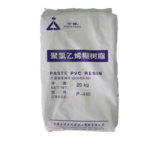
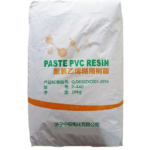
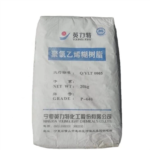
PVC Paste Resin(EPVC)
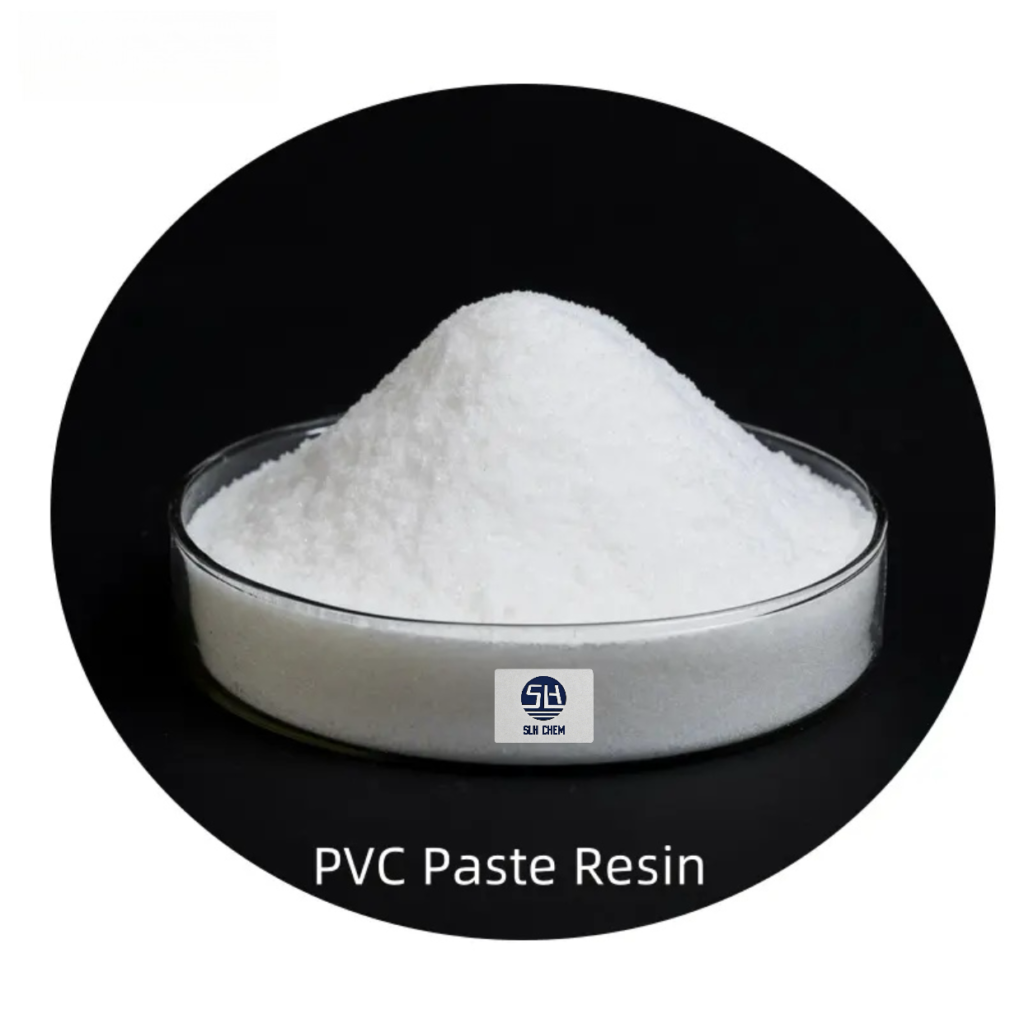
PVC Paste Resin(EPVC)
CASN0.:9002-86-2
It is white powder widely used in the production of PVC toy industry, dipping industry,automobile decoration materials,artificial leather,vinyl toys,soft trademarks,wallpaper,paint coatings, foamed plastics,etc.
Brand Name: Sinopec、Junzheng、Younglight、Zhongtai、Tianye、Tianchen
Model Number: P440、P450、TPM-31、TPH-31、LF-71、LF-51
Packing: 25kg bag/jumbo bag
产品详情
PVC Paste Resin (EPVC) is a fine-particle polyvinyl chloride resin produced via emulsion polymerization, designed to form stable, flowable plastisols with plasticizers for coating, dipping, casting, and slush molding. It is also called Emulsion PVC, distinct from suspension PVC (S-PVC). Below is a detailed breakdown:
Core Definition & Production
- Chemical Identity: A homopolymer of vinyl chloride (VCM), with ultra-fine primary particles (0.1–3 μm) aggregated into porous secondary particles (50–200 μm), enabling rapid plasticizer absorption to form paste (plastisol).
- Process: Emulsion polymerization in aqueous media with surfactants, initiators, and chain regulators; followed by dewatering, drying, and post-treatment to control particle size, porosity, and K-value (molecular weight).
- Key Grades: Classified by K-value (e.g., K57–67 for general paste) and application-specific grades (e.g., low-fogging for automotive, low-migration for food contact).
Critical Properties
| Property | Typical Range | Function |
| Primary Particle Size | 0.1–3 μm | Controls plastisol viscosity and film smoothness |
| Bulk Density | 0.35–0.55 g/cm³ | Affects handling and plastisol mixing efficiency |
| K-value | 57–67 | Dictates mechanical strength and flexibility post-cure |
| Plasticizer Absorption | 60–120 phr | Determines paste flow and final product softness |
| Thermal Stability | 160–180°C (10 min) | Prevents degradation during gelation/curing |
Processing & Applications
- Plastisol Formulation: Mix EPVC with plasticizers (e.g., DINP, DOTP), stabilizers, fillers, pigments, and thixotropes to form a flowable paste with controlled viscosity (100–100,000 mPa·s).
- Curing: Gelation (100–140°C) → fusion (160–180°C) to form a homogeneous, flexible film or part.
- Key Uses:
- Coatings: Artificial leather, wallcoverings, underbody coatings, and fabric lamination.
- Molding: Slush-molded toys, tool grips, and automotive interior trim.
- Dipping: Gloves, shoe soles, and dip-molded seals.
- Other: Caulks, sealants, and textile coatings.
EPVC vs. S-PVC
| Aspect | EPVC (Paste Resin) | S-PVC (Suspension Resin) |
| Particle Size | Ultra-fine (0.1–3 μm primary) | Coarse (50–200 μm primary) |
| Processing | Paste-based (dipping, slush molding) | Dry-blend (extrusion, injection molding) |
| Plasticizer Demand | High (60–120 phr) | Low (0–50 phr, rigid) |
| Film/Coating Use | Preferred for thin, smooth films | Not suitable for paste applications |