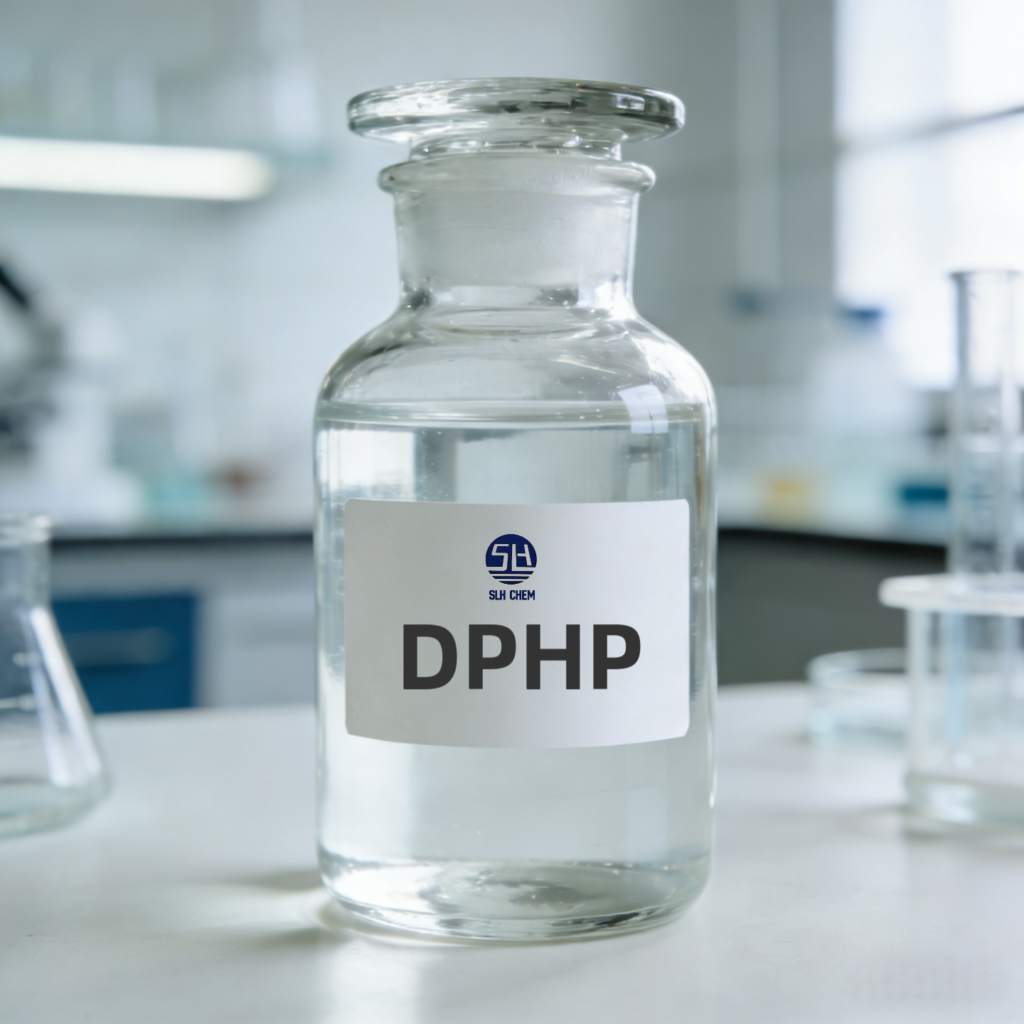
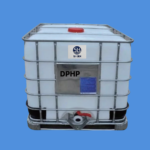
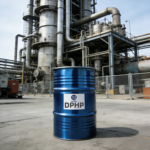
DPHP
DPHP (Di-(2-propylheptyl) phthalate) is a high-molecular-weight branched phthalate plasticizer, widely used in flexible PVC for its low volatility, good thermal stability, and compatibility, often replacing DEHP/DINP in general and demanding applications.
产品详情
- Basic Chemical Properties
Full Name: Di-(2-propylheptyl) phthalate (bis(2-propylheptyl) benzene-1,2-dicarboxylate)
CAS Number: 53306-54-0ECHA
Chemical Formula: C₂₈H₄₆O₄
Molecular Structure: Diester of phthalic anhydride and 2-propylheptanol (branched 10‑carbon alcohol)
Physical Appearance: Colorless to pale yellow viscous oily liquid; mild odor
Key Metrics: Density ~0.94 g/cm³ (20°C); viscosity ~300 mPa·s (25°C); boiling point >400°C; flash point ~230°C
Solubility: Insoluble in water; miscible with hydrocarbons, esters, ketones; compatible with PVC, synthetic rubbers, and cellulose resins
Stability: Low volatility; good thermal/UV stability; low migration; soap‑water leach resistance - Core Functions & Applications
DPHP excels in PVC plasticization with balanced performance for diverse end uses:
General‑purpose flexible PVC: Wire/cable insulation, automotive interiors (seats, dashboards), flooring, tarpaulins, pool liners, and carpet backing.
Automotive‑grade PVC: Meets strict heat/UV/anti‑fog requirements for underhood and interior parts.
Food‑contact materials: FDA‑compliant for gaskets, seals, and packaging components (low migration)CPSC.
Industrial lubricants: Synthetic base stock for compressor fluids and specialty lubricantsCPSC. - Advantages & Limitations
Advantages Limitations
Low volatility (minimizes loss in high‑temp use) Higher cost vs. DINP; lower cold resistance than DOA
Good thermal/UV stability (outdoor/automotive use) Branched phthalate structure (regulatory scrutiny in some regions)
Direct replacement for DEHP/DINP in most PVC formulations Lower plasticizing efficiency vs. DEHP (slightly higher dosage)
Low migration/leach resistance (product safety) Limited compatibility with some polar polymers - Production Process
Industrial synthesis involves esterification of phthalic anhydride with 2‑propylheptanol:
React phthalic anhydride with 2‑propylheptanol (molar ratio ~1:2) using a catalyst (e.g., sulfuric acid, p‑toluenesulfonic acid).
Heat to 140–160°C under vacuum to drive esterification and remove water.
Neutralize, wash, and distill to obtain high‑purity DPHP (purity ≥99%).