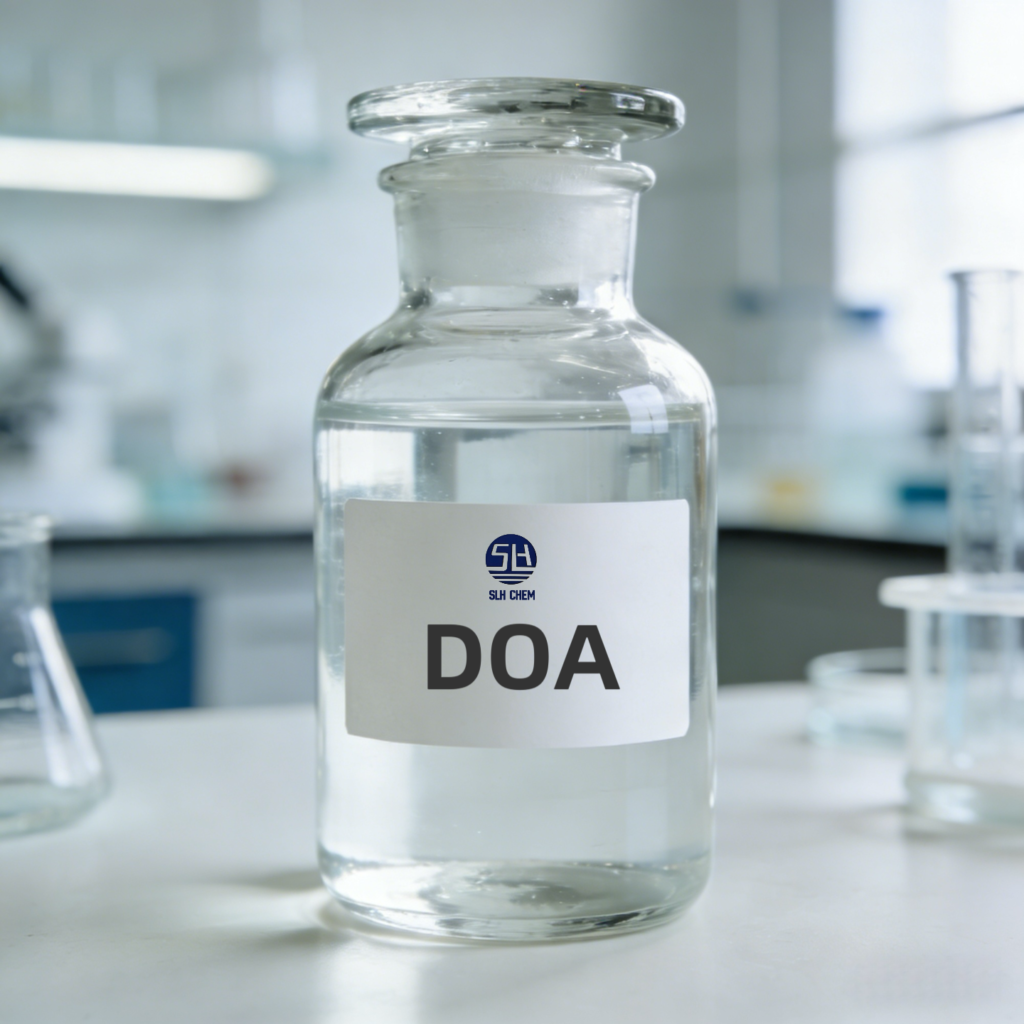
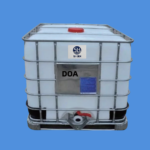
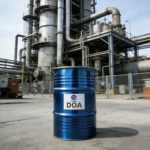
DOA
Dioctyl Adipate(DOA), a type of non-phthalate aliphatic ester plasticizer widely used in the polymer industry for its excellent low-temperature flexibility and compatibility with various resins.
产品详情
- Basic Chemical Properties
Chemical Formula:
C22H42O4
Molecular Structure: Ester synthesized from adipic acid (a six-carbon dicarboxylic acid) and 2-ethylhexanol (octyl alcohol). Its linear aliphatic structure gives it unique cold-resistant properties.Physical Appearance: Colorless, clear, oily liquid at room temperature; insoluble in water, miscible with most organic solvents (alcohols, esters, hydrocarbons) and compatible with PVC, cellulose resins, and synthetic rubbers.Key Characteristics: Ultra-low volatility, outstanding cold resistance, good light stability, and moderate plasticizing efficiency.
| Property | DOA | DINP | DOTP |
|---|---|---|---|
| Category | Aliphatic non-phthalate | Phthalate | Aromatic non-phthalate |
| Cold Resistance | Excellent | Good | Moderate |
| Heat Resistance | Poor | Moderate | Excellent |
| Main Use Case | Cold-resistant PVC | General-purpose flexible PVC | High-temperature PVC/food-contact |
- Main Applications
DOA is valued for its ability to maintain polymer flexibility at low temperatures, making it ideal for the following scenarios:
Low-temperature flexible PVC products: Refrigerator door seals, cold-resistant hoses, automotive parts (e.g., wire insulation for cold climates), and PVC films used in freezing environments.
Cellulose and synthetic rubber products: Plasticizer for nitrocellulose coatings, cellulose acetate films, and nitrile rubber (NBR) to improve processability and elasticity.
Food-contact materials: Complies with FDA regulations for limited food-contact applications (e.g., gaskets, seals in food packaging machinery) due to its low migration rate. - Advantages & Limitations
Advantages Limitations
Superior cold resistance (keeps PVC flexible at -50°C) Lower plasticizing efficiency compared to phthalates (requires higher dosage for the same flexibility)
Low volatility (minimizes plasticizer loss during long-term use) Poor heat resistance (not suitable for high-temperature applications above 80°C)
Non-phthalate structure (safer for sensitive applications) Relatively higher cost than traditional phthalate plasticizers