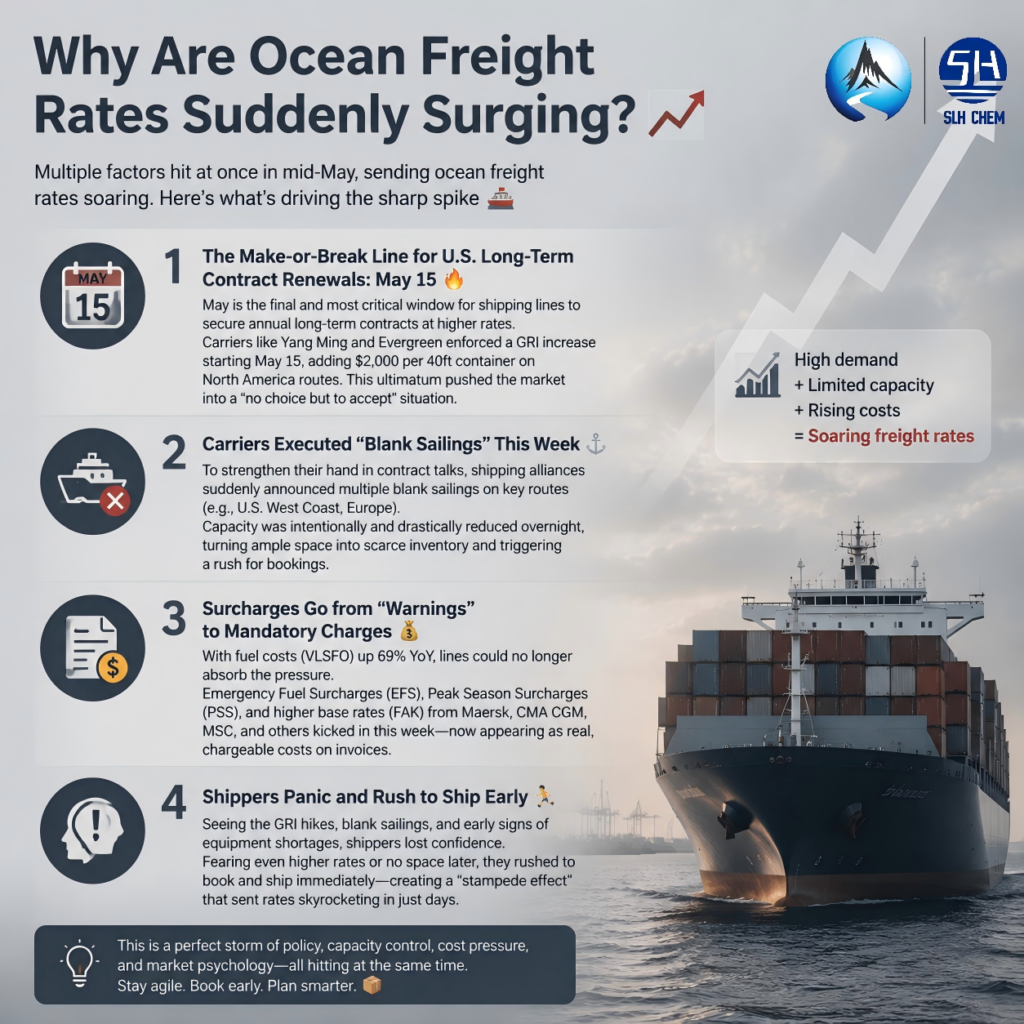
IntroductionIn May 2026, global ocean freight rates experienced a sudden and dramatic increase, catching many shippers by surprise. Several coordinated factors contributed to this surge, including long-term contract negotiations, enforced rate increases, blank sailings, rising fuel costs, and panic-driven front-loading by shippers. Understanding these factors is crucial for importers, exporters, and logistics professionals preparing for the volatile shipping market.
1. Long-Term Contract Deadlines and GRI EnforcementMay marks the final window for global carriers to secure annual long-term contracts at higher rates. To gain leverage in these negotiations, major carriers such as Yang Ming and Evergreen implemented a General Rate Increase (GRI) starting May 15, 2026, adding $2,000 per 40ft container on US routes. This hard deadline forced shippers into a position where paying higher rates was unavoidable.
2. Blank Sailings and Artificial Capacity ScarcityShipping alliances strategically executed blank sailings on key routes including the US West Coast and Europe. By reducing available capacity overnight, carriers created artificial scarcity, turning previously abundant container space into a highly sought-after commodity. This sudden shortage triggered a rush to secure bookings, further escalating rates.
3. Surcharges Becoming Real CostsPrior warnings about fuel cost surges and seasonal charges became actual invoice line items. With VLSFO fuel costs up 69% YoY, carriers could no longer absorb the pressure. Emergency Fuel Surcharges (EFS), Peak Season Surcharges (PSS), and adjusted base freight rates (FAK) were fully enforced, adding hundreds to over a thousand dollars per container.
4. Shipper Panic and Front-LoadingAs GRI enforcement and blank sailings became evident, shippers who had been waiting for rates to drop suddenly rushed to move their goods early. This “front-loading” created a stampede effect, concentrating demand in a short period and pushing freight rates even higher.
ConclusionThe May 2026 spike in ocean freight rates illustrates a perfect storm of policy enforcement, controlled capacity, rising costs, and market psychology. Shippers who plan ahead, monitor GRI announcements, and secure bookings early are better positioned to mitigate the impact of sudden cost surges.
Call to ActionStay informed on shipping rate updates and optimize your logistics strategy. For more insights and shipping solutions, contact our team today.