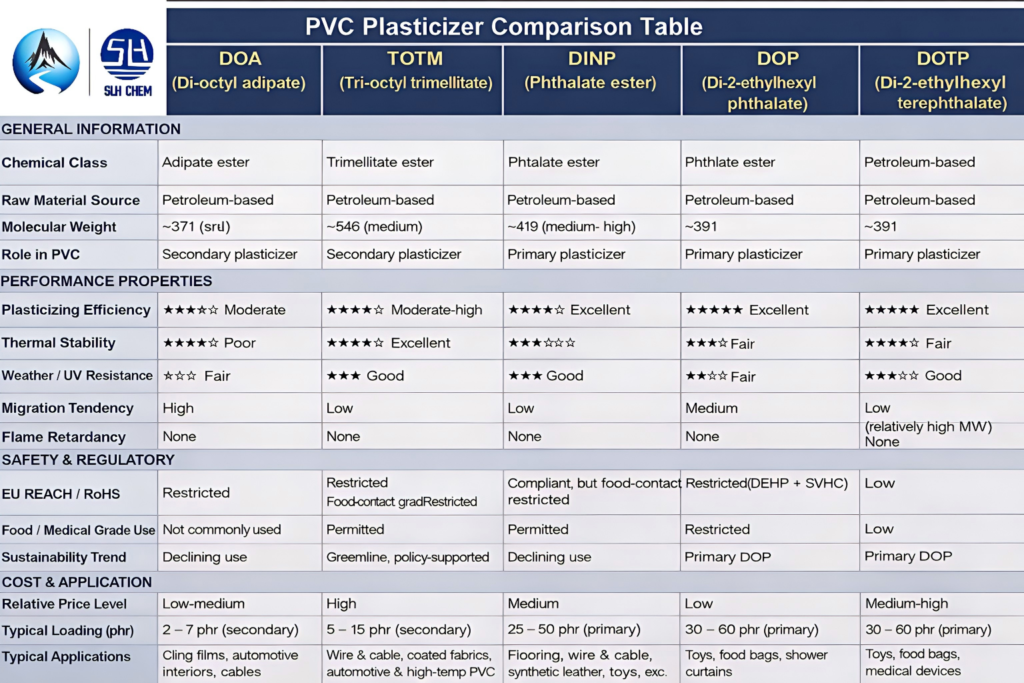
Selecting the right plasticizer is a critical step in optimizing PVC product performance, processing efficiency, and compliance with global regulations. With multiple options available, understanding the differences between DOA, TOTM, DINP, DOP, and DOTP can help manufacturers make smarter formulation decisions.
In this article, we provide a detailed comparison of these commonly used plasticizers based on performance, cost, and typical applications.
What Are PVC Plasticizers?
Plasticizers are essential additives used to increase the flexibility, softness, and processability of polyvinyl chloride (PVC). Without plasticizers, PVC is rigid and brittle.
Depending on their function, plasticizers can be classified into:
- Primary plasticizers (e.g., DOP, DOTP, DINP)
- Secondary plasticizers (e.g., DOA, TOTM in some formulations)
They are widely applied in industries such as cable manufacturing, flooring, artificial leather, films, and automotive materials.
Overview of Key Plasticizers
DOA (Di-Octyl Adipate)
DOA is well known for its excellent low-temperature flexibility. It is commonly used in applications requiring softness in cold environments, such as food packaging films and outdoor PVC products.
TOTM (Trioctyl Trimellitate)
TOTM is a premium plasticizer with outstanding thermal stability and low volatility. It is ideal for high-temperature applications such as automotive wires, cables, and heat-resistant PVC compounds.
DINP (Diisononyl Phthalate)
DINP is a widely used general-purpose plasticizer that offers a good balance between cost and performance. It is suitable for flooring, cables, and synthetic leather.
DOP (Di-2-ethylhexyl Phthalate)
DOP is one of the most traditional and widely used plasticizers due to its excellent plasticizing efficiency and affordability. It remains popular in many standard PVC applications.
DOTP (Di-2-ethylhexyl Terephthalate)
DOTP is considered a more environmentally friendly alternative to DOP. It provides good durability, low migration, and better compliance with international regulations.
Performance Comparison
Plasticizing Efficiency
DOP and DOTP offer excellent plasticizing efficiency, making them the preferred primary plasticizers in most PVC formulations. DINP also delivers strong performance, while DOA and TOTM are more specialized.
Thermal Stability
TOTM performs best in high-temperature environments, followed by DOTP. DINP and DOP provide moderate stability, while DOA is less suitable for heat-intensive applications.
Low-Temperature Flexibility
DOA stands out for its superior low-temperature flexibility, making it ideal for cold climates. Other plasticizers generally offer moderate performance in this area.
Migration Resistance
TOTM and DOTP provide low migration, which is important for long-term durability and regulatory compliance. DOP and DINP show moderate migration, while DOA has relatively higher volatility.
Safety and Environmental Considerations
With increasing global regulations, environmental and health compliance has become a key factor.
- DOTP is widely accepted as a non-phthalate, eco-friendly plasticizer
- DINP is compliant in many regions but subject to some restrictions
- DOP is being phased out in certain applications due to regulatory concerns
- TOTM is suitable for high-end and sensitive applications
- DOA is often used in food-contact materials but with specific limitations
Choosing the right plasticizer depends on your target market and compliance requirements such as REACH and RoHS.
Cost Comparison
From a pricing perspective:
- DOP remains one of the most cost-effective options
- DINP offers a balance between price and performance
- DOTP is slightly higher in price but provides better compliance
- DOA is moderately priced for specialty use
- TOTM is typically the most expensive due to its high-performance properties
Cost should always be evaluated together with performance and application needs.
Typical Applications
Different plasticizers are suited for different applications:
- DOA: Food films, cold-resistant products, flexible coatings
- TOTM: Automotive cables, heat-resistant wires, high-end PVC
- DINP: Flooring, synthetic leather, general PVC products
- DOP: Toys, films, cables, general-purpose PVC
- DOTP: Medical devices, food packaging, eco-friendly applications
How to Choose the Right Plasticizer
When selecting a plasticizer, consider the following factors:
- Required flexibility and durability
- Temperature resistance
- Regulatory compliance
- Cost efficiency
- End-use application
For general use, DOP or DINP may be sufficient.For environmentally sensitive markets, DOTP is preferred.For extreme conditions, TOTM or DOA can provide specialized performance.
Conclusion
Understanding the differences between DOA, TOTM, DINP, DOP, and DOTP is essential for optimizing PVC formulations. Each plasticizer has its own advantages in terms of performance, cost, and application.
By selecting the right combination, manufacturers can improve product quality, meet regulatory standards, and remain competitive in the global market.