Calcium Stearate
Calcium Stearate
CASNo:1592-23-0
For PVC heat stabilizer and a variety of plastic processing lubricant, re- lease agent,etc. In hard products,the gelation rate can be improved by com- bining with basic lead salt and lead soap, used for food packaging, medical equipment and other requirements of non-toxic soft film and equipment. It can also be used as halogen absorber for polyethylene and polypropylene to elimi- nate the adverse effect of residual catalyst on color and stability. In rubber pro- cessing as a plasticizer,can make natural rubber and rubber softening,but alsO used in the production of pencil lead and medicine, fragrance industry.
Packing: 25kg bag
产品详情
Calcium Stearate is a non-toxic organic metal salt of stearic acid and calcium, belonging to the metallic stearate family. It is widely used as a lubricant, mold release agent, and stabilizer in the plastics, rubber, and construction industries, with a focus on external lubrication performance.
1. Basic Chemical Properties
| Parameter | Details |
| Chemical Formula | $$\text{Ca(C}_{18}\text{H}_{35}\text{O}_{2}\text{)}_{2$$ |
| Molecular Weight | ~607.0 g/mol |
| CAS Number | 1592-23-0 |
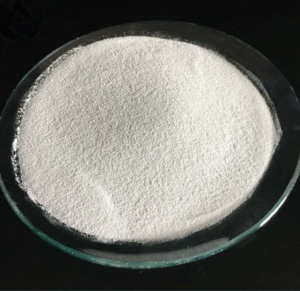
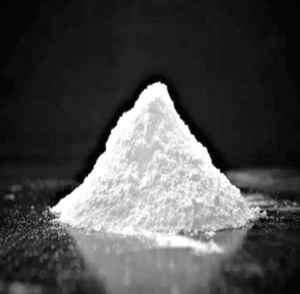
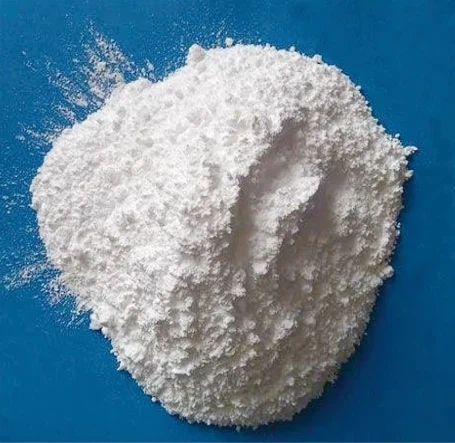
| Physical Appearance | White, odorless, fine powder; hydrophobic |
| Key Metrics | Density ~1.08 g/cm³; melting point 147–155°C |
| Solubility | Insoluble in water, ethanol, and ether; dispersible in hot mineral oils; decomposes in strong acids to form stearic acid and calcium salts |
2. Core Production Process
- React stearic acid (a C18 saturated fatty acid) with calcium oxide (CaO) or calcium hydroxide Ca(OH)2 in hot water.
- Heat the mixture to 80–100°C, with stirring, to promote the neutralization reaction.
- Filter, dry, and mill the resulting precipitate to obtain fine calcium stearate powder.
3. Main Applications
Calcium stearate’s primary function is external lubrication (reducing friction between polymer melts and processing equipment surfaces), with secondary roles as a stabilizer and anti-caking agent:
- Plastics Industry (Dominant Use):
- PVC Processing: Acts as an external lubricant for rigid PVC products (pipes, profiles, window frames) to prevent melt adhesion to extruders, calenders, and molds. It also serves as a secondary heat stabilizer, synergizing with calcium/zinc stabilizers to improve PVC thermal stability.
- Other Polymers: Used in PE, PP, ABS, and engineering plastics as a mold release agent and anti-blocking additive, improving product surface smoothness.
- Rubber Industry:
- Serves as a mold release agent for rubber vulcanization (NR, SBR, NBR) to prevent finished products from sticking to molds.
- Acts as a softener and dispersant for fillers (e.g., carbon black, silica), enhancing filler dispersion in rubber compounds.
- Construction & Building Materials:
- Added to cement, gypsum, and concrete to improve workability and water repellency; reduces cracking and enhances surface finish.
- Used as an anti-caking agent for dry mortar mixes to prevent clumping during storage.
- Other Fields:
- Cosmetics: Anti-caking agent for powder products (face powder, talcum powder).
- Paints & Coatings: Anti-settling agent for pigments, improving coating uniformity.
4. Advantages & Limitations
| Advantages | Limitations |
| Excellent external lubrication and mold release performance | Weak internal lubrication (cannot improve polymer melt flowability alone) |
| Non-toxic, compliant with FDA and EU food-contact standards | Low thermal stability (not suitable for high-temperature polymer processing above 200°C) |
| Cost-effective compared to zinc stearate | Can cause surface whitening in plastics if over-dosed |
| Good compatibility with calcium/zinc stabilizer systems | Poor water solubility (requires proper dispersion in aqueous formulations) |
5. Comparison with Zinc Stearate
| Property | Calcium Stearate | Zinc Stearate |
| Lubrication Type | Strong external lubrication | Balanced internal/external lubrication |
| Stabilization Effect | Secondary heat stabilizer for PVC | Primary heat stabilizer for PVC |
| Mold Release | Excellent | Good |
| Best For | Rigid PVC processing, cement additives | Flexible PVC processing, rubber vulcanization activators |